

Date: Tuesday, 26th May 2026
BACKGROUND
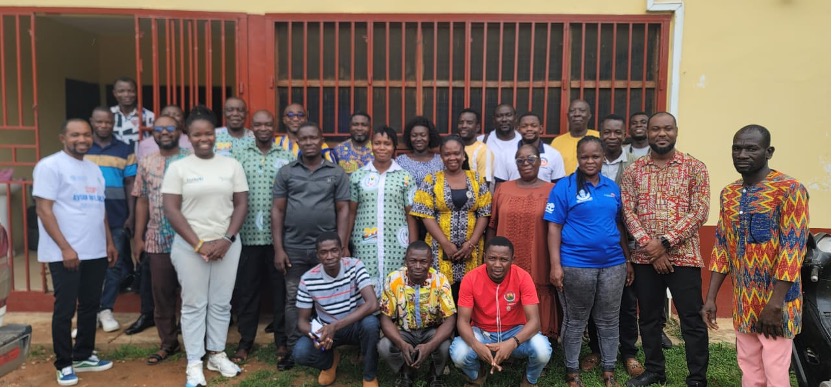
The Peasant Farmers Association of Ghana (PFAG), as part of the project on “Strengthening Farmers’ Voices to Promote Accountability and Inclusive Decision-Making in Ghana,” supported by the Star Ghana Foundation, organized a one-day capacity building session for members of the Multi-Stakeholder Platform (MSP) in the Krachi East District of the Oti region.
The MSP comprises representatives from the Krachi East district assembly, PFAG district executives, Civil Society Organizations, processors, aggregators, traditional authorities, representatives of public accountability institutions, private sector, persons with disability, the, media youth and women’s groups, and was strategically constituted as part of the project to engage duty bearers and rights holders, tackle bottlenecks affecting smallholder farmers and deepen inclusive governance and accountability.
SESSION HIGHLIGHTS
Opening session
Bismark Owusu Nortey, the Acting Executive Director of PFAG, highlighted the role of the platform in ensuring that there is an effective feedback loop between local authorities and constituents. He added that the essence of the exercise was to enhance the abilities of the MSP members and equip them with the tools, skills and knowledge necessary for them to engage productively with duty bearers. It was also a platform to share updates and feedback to representatives for onward discussion with their respective members.
The Oti regional focal person for PFAG, Mr. George Achibra, also implored participants to be deliberate in seeking relevant information in order to engage duty bearers. He added that PFAG,
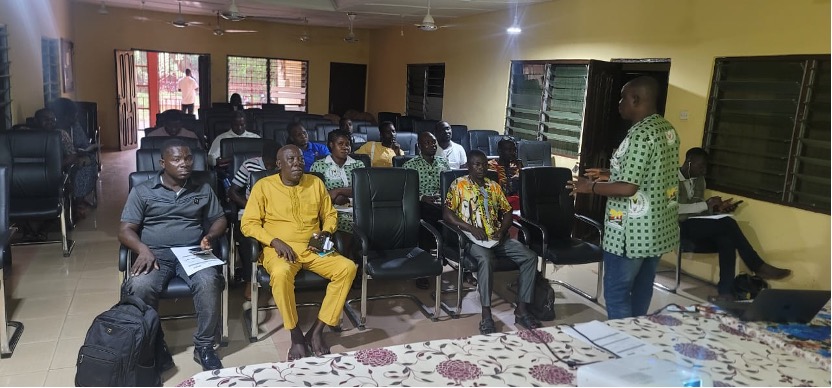
offers the platform for farmers and other interest groups to consolidate information for onward advocacy and advised members to take advantage of the knowledge to enhance their work.
Safeguarding & Inclusive Engagement
Mr. Nortey then led participants through principles of inclusive engagement, covering safeguarding concerns, stakeholder commitments, and reporting mechanisms. He stressed that all actors must protect children, vulnerable adults, and community members from abuse, exploitation, and discrimination. He added that PFAG was particularly interested in issues of safeguarding adding that members of the MSP are also guided by safeguarding protocols. He urged members to ensure that any safeguarding concerns are addressed promptly, confidentially, and with dignity.
Municipal Composite Budget Analysis
Madam Jennifer Moffart, the Country Director of BudgIT Ghana, unpacked the 2026 Krachi East Municipal Assembly composite budget.
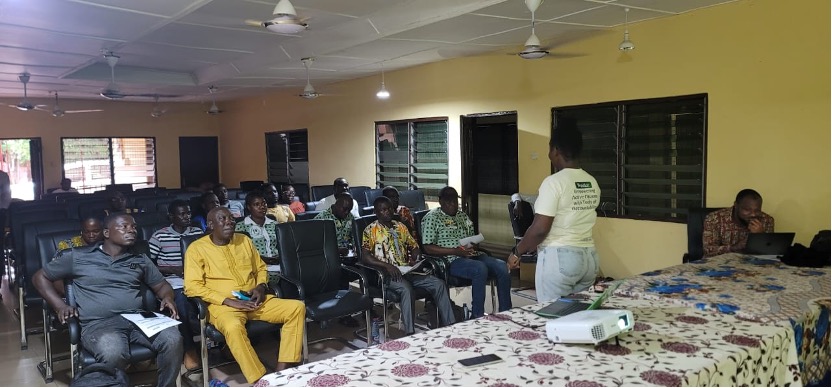
The analysis revealed a structural gap, where despite that the Agriculture sector constitutes the main economic activity of the district with accounting for 68.9%, allocation to the sector was only 1.63% of the total budget. The participants were also exposed to various agricultural interventions within the district and the need for them to be interested, closely monitor their progress and report feedback to the assembly. The Krachi East district director of agriculture, Mr. Emmanuel Blaconi, also shared insights on the district’s budget, indicating its inadequacy, but stressing that the Assembly was doing its best to ensure that key interventions are implemented for the benefit of farmers. He urged participants to support PFAG and engage in relentless advocacy to ensure their concerns are addressed by government.
Advocacy for Accountability
The MSP members were taken through various advocacy tools and frameworks to ensure an effective advocacy. These approaches were to promote effective advocacy which msut be clear, fact-based, solution-oriented and impactful. He called on the platform to leverage its collective voice to demand improved policy responsiveness, enhanced accountability in service delivery, and sustained constructive engagement with local governance structures.
The participants expressed satisfaction with the knowledge gained and indicated their resolve to work with each other to ensure that needs of farmers within the municipality are addressed.
NEXT STEPS
All participants pledged to monitor projects being undertaken within the district, and use the available tools including the scorecard, the Right to Information Act and other engagements to ensure allocations are used for their intended purposes.